
The Importance of Precision Cooling in Industrial Manufacturing
In modern industrial manufacturing, precision cooling plays a critical role in maintaining production efficiency and equipment stability. Whether you operate high-power fiber lasers, CO₂ engraving machines, CNC spindles, or other temperature-sensitive equipment, a reliable industrial chiller becomes the backbone of your thermal management system. Without stable cooling, machines can experience performance degradation, reduced accuracy, and even costly downtime. For this reason, choosing the right chiller and maintaining it properly is essential for ensuring consistent 24/7 operation.
How an Industrial Chiller Works
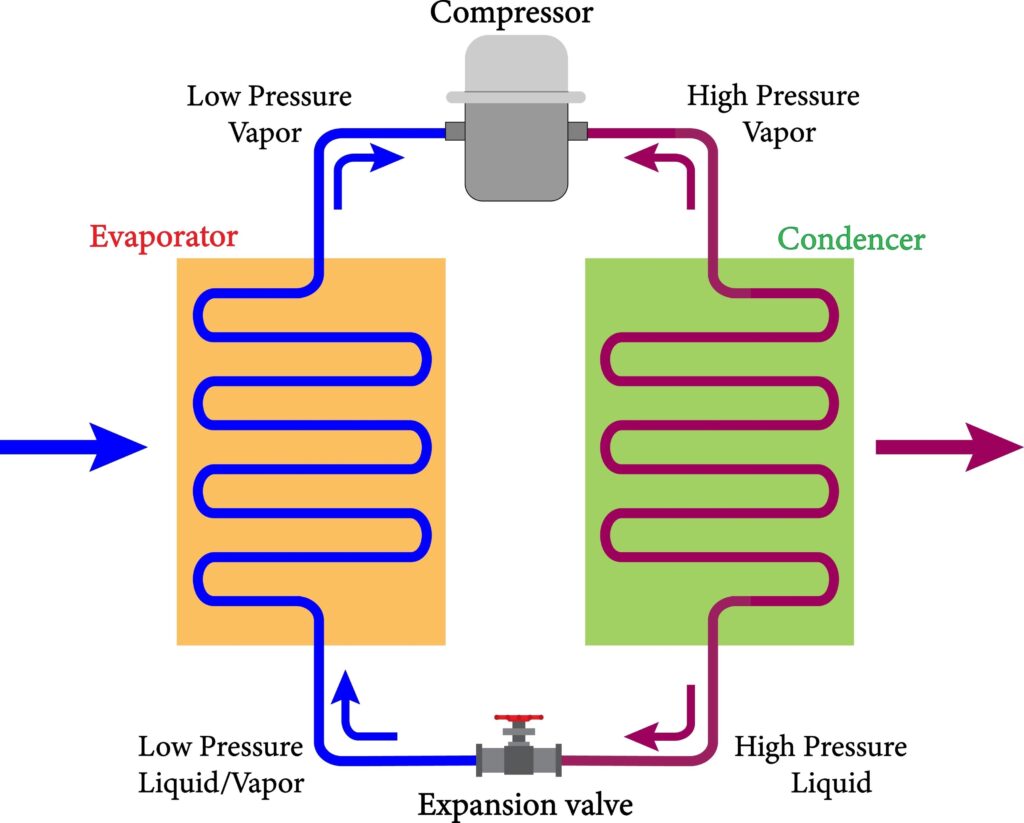
An industrial chiller works by removing heat from a circulating liquid and transferring it away from the equipment that generates heat. Most systems rely on either a vapor-compression refrigeration cycle or an absorption cycle to achieve this process. During operation, the refrigerant circulates through several key components that work together to control temperature. The compressor acts as the heart of the system by circulating the refrigerant throughout the loop. The condenser then releases the absorbed heat into the surrounding environment, either through air cooling or water cooling. Inside the evaporator, the refrigerant absorbs heat from the process water, lowering its temperature before the cooled liquid is sent back through the machinery. An expansion valve regulates the refrigerant flow and pressure, ensuring the system maintains stable and efficient cooling performance.
When selecting an industrial chiller, one of the most important decisions involves choosing between an air-cooled system and a water-cooled system. Air-cooled chillers are widely favored for their simplicity and convenience. They are typically designed as plug-and-play units that can be installed quickly without the need for additional infrastructure. Maintenance requirements are also relatively low, usually limited to cleaning air filters and ensuring proper ventilation. Because of these advantages, air-cooled chillers are often the preferred option for small to medium-sized workshops and indoor environments with good airflow.
Water-cooled chillers, on the other hand, are commonly used in large industrial facilities where higher efficiency is required. These systems use cooling towers to dissipate heat, which allows them to achieve better performance and a higher coefficient of performance (COP). However, their installation is more complex and they require regular water treatment to prevent corrosion, scaling, and biological growth. While the initial setup cost and maintenance demands are higher, water-cooled chillers can deliver superior efficiency in large-scale operations or in environments where ambient temperatures are extremely high.
Key Factors When Choosing an Industrial Chiller
For B2B buyers, several technical factors should always be considered before selecting a chiller. Cooling capacity is one of the most critical specifications. Instead of choosing a unit that merely matches the calculated heat load, it is recommended to include a safety margin of approximately twenty to thirty percent. This extra capacity ensures that the system can maintain stable cooling performance even during peak summer temperatures or when equipment loads fluctuate.
Temperature stability is another key parameter, particularly for laser-based applications. Even minor temperature fluctuations can influence laser wavelength and beam quality. A system with temperature stability of ±0.3°C provides significantly better performance for precision applications than a unit with ±1.0°C tolerance. Maintaining consistent temperature helps prevent beam drift, improves cutting accuracy, and extends the service life of sensitive components.
Pump performance is equally important. The pump flow rate determines how effectively chilled water circulates through the system, while the pump head indicates the pressure available to push water through piping and internal machine channels. If the pump head is too low, the coolant may not reach higher points within the equipment or may fail to overcome internal resistance. Reviewing the pump specifications and matching them to the machine’s requirements is essential for ensuring proper cooling circulation.
Proper maintenance also plays a major role in maximizing the return on investment of an industrial chiller. With regular upkeep, many chillers can operate reliably for more than a decade. One of the simplest but most important maintenance tasks is changing the cooling water on a regular basis. Using distilled or purified water helps prevent mineral deposits that can accumulate inside pipes and heat exchangers. Replacing the water every few months helps maintain optimal thermal efficiency and protects internal components.
Dust accumulation can also affect performance, particularly for air-cooled units operating in industrial environments. Dust and debris can block the condenser filters, restricting airflow and causing the system to trigger high-temperature alarms. Cleaning the filters weekly in dusty environments helps maintain proper heat dissipation and prevents unnecessary shutdowns.
Seasonal protection is another consideration for facilities located in cold climates. If the surrounding temperature drops below freezing, the water inside the system may expand and damage internal components such as the evaporator. Adding specialized industrial antifreeze can prevent freezing and protect the system during winter conditions.
Many users occasionally encounter alarm signals from their chillers, which are typically designed to warn operators of potential issues. For example, some systems display alarm codes when room temperature exceeds safe limits or when water flow becomes insufficient. These alerts are usually related to environmental conditions, blocked filters, or circulation problems. Addressing the underlying cause promptly can prevent further damage and restore normal operation.
Another common question involves whether tap water can be used inside the chiller. Although it may seem convenient, tap water contains dissolved minerals that gradually form scale deposits inside pipes and cooling channels. Over time, these deposits reduce heat transfer efficiency and may even clog narrow passages inside sensitive equipment. For long-term reliability, distilled or purified water is always the better choice.
In industrial production environments where stability and efficiency are essential, a properly selected and maintained chiller can significantly improve operational reliability. By understanding how these systems work, selecting equipment with appropriate specifications, and following consistent maintenance practices, manufacturers can ensure their cooling systems deliver stable performance for many years.
